Persian Tomato Rice (Dami Gojeh Farangi)
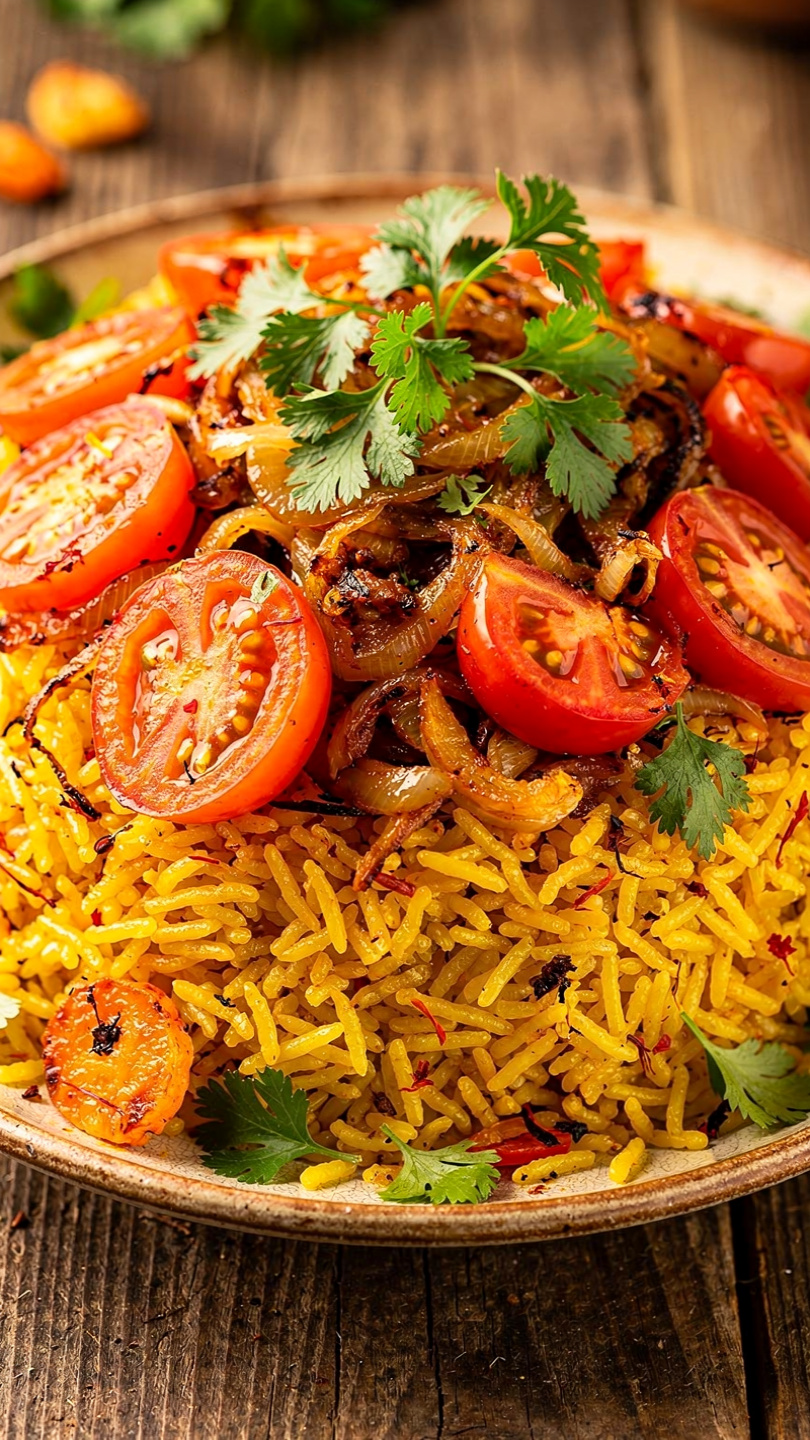
Persian Tomato Rice, or Dami Gojeh Farangi, is a fragrant, one-pot comfort dish where fluffy saffron-kissed rice is slow-cooked with ripe tomatoes, turmeric, and warm spices until a golden, crispy crust forms on the bottom.

The Persian Comfort Dish You Will Want on Repeat
There is a particular kind of magic that happens at the bottom of a Persian rice pot. While the fragrant, saffron-kissed grains steam to fluffy perfection above, a golden, crackling crust quietly forms below, caramelizing in oil until it shatters like a potato chip. That crust is called tahdig, and it is the most fought-over bite at any Persian table. This recipe for Dami Gojeh Farangi, Persian Tomato Rice, puts that crust front and center alongside one of the most beloved rice preparations in Iranian home cooking.
Dami (meaning "steamed" or "stewed" in Farsi) is a style of Persian rice where the ingredients are cooked directly with the rice rather than served alongside it. Ripe tomatoes, turmeric, a whisper of cinnamon, and golden onion melt into every grain during a slow, covered steam. The result is deeply savory, subtly sweet, warmly spiced, and impossible to stop eating.
Getting Persian rice right is as much about technique as it is about ingredients. A heavy-bottomed pot distributes heat evenly, which is what creates that perfect tahdig without burning. Good-quality basmati rice and real saffron threads also make a genuine difference here.
Tools & Ingredients We Recommend



Why Soaking the Rice Actually Matters
If you have ever made Persian rice and ended up with mushy, clumped grains, skipping the soak is almost certainly the culprit. Soaking basmati in cold water for at least 30 minutes (and up to 2 hours) achieves two things:
- It hydrates the outer starch layer so the grains cook more evenly.
- It shortens the active cooking time, reducing the window where overcooking can happen.
Drain the rice thoroughly before adding it to the pot. Any excess water will throw off the liquid ratio and prevent that beautiful tahdig from forming.
Chef's Tip: The kitchen towel trick is the secret weapon of Persian rice cookery. Wrapping the lid in a towel before placing it on the pot absorbs condensation so that no water drips back onto the rice. This is what keeps the grains light and separate rather than wet and sticky.
Building Layers of Flavor
The spice combination here is classic Persian pantry: turmeric for earthiness and that signature golden color, cumin for warmth, and just a hint of cinnamon that rounds everything out without tasting overtly sweet. Do not skip the tomato paste step. Letting it caramelize in the pot for a full two minutes before adding the fresh tomatoes concentrates its flavor dramatically and adds a subtle savory depth that makes the dish taste like it has been cooking for hours.
For the tomatoes, ripe roma tomatoes are ideal because they are meaty and low in excess water. In summer, use the ripest farmers market tomatoes you can find. In winter, good canned whole tomatoes, drained and sliced, work just as well.
Ready to make it? Here is the full step-by-step recipe:
Persian Tomato Rice (Dami Gojeh Farangi)
Persian Tomato Rice, or Dami Gojeh Farangi, is a fragrant, one-pot comfort dish where fluffy saffron-kissed rice is slow-cooked with ripe tomatoes, turmeric, and warm spices until a golden, crispy crust forms on the bottom.
Ingredients
- 2 cups basmati rice, rinsed and soaked 30 minutes, then drained
- 4 ripe roma tomatoes, cored and sliced into rounds
- 2 tbsp tomato paste
- 1 yellow onion, finely diced
- 3 garlic cloves, minced
- 3 tbsp neutral oil or vegetable oil, divided
- 1 tsp ground turmeric
- 1/2 tsp ground cumin
- 1/4 tsp cinnamon
- 1/4 tsp saffron threads, steeped in 3 tbsp hot water for 10 minutes
- 2 1/2 cups water, plus the saffron-steeped water
- 1 1/2 tsp kosher salt, adjust to taste
- 1/2 tsp black pepper, freshly ground
- 1/4 cup fresh flat-leaf parsley, roughly chopped, for garnish
Instruction
Rinse the basmati rice in cold water until the water runs clear, then soak in fresh cold water for 30 minutes. Drain well and set aside.
Steep the saffron threads in 3 tablespoons of hot (not boiling) water and set aside for at least 10 minutes.
Heat 2 tablespoons of the oil in a heavy-bottomed pot or Dutch oven over medium heat. Add the diced onion and cook, stirring occasionally, for 8 to 10 minutes until softened and lightly golden.
Add the minced garlic, turmeric, cumin, and cinnamon to the onion. Stir continuously for 1 minute until fragrant.
Stir in the tomato paste and cook for 2 minutes, letting it caramelize slightly against the bottom of the pot.
Add the sliced tomatoes, salt, and black pepper. Stir gently and cook for 3 to 4 minutes until the tomatoes begin to soften and release their juices.
Add the drained rice to the pot and stir carefully to coat every grain in the tomato and spice mixture.
Pour in the 2.5 cups of water along with the saffron-steeped water. Stir once to combine, then taste the liquid and adjust salt if needed.
Bring the pot to a boil over medium-high heat, uncovered. Once boiling, reduce the heat to the lowest setting. Drizzle the remaining 1 tablespoon of oil evenly over the surface of the rice.
Wrap the pot lid tightly with a clean kitchen towel, securing the towel at the top so it does not hang near the flame. Place the lid on the pot. This towel method (the dam technique) traps steam and prevents condensation from dripping back onto the rice.
Cook undisturbed on the lowest heat setting for 35 to 40 minutes. The rice is ready when it is fully cooked through and a golden, crispy crust (tahdig) has formed on the bottom.
Remove the pot from the heat and let it rest, covered, for 5 minutes.
To serve, use a large spoon to scoop the fluffy rice onto a serving platter. Then use a spatula or wooden spoon to carefully lift the crispy tahdig from the bottom of the pot and place the golden pieces on top of or alongside the rice. Garnish with fresh parsley and serve immediately.
Equipment
- Heavy-bottomed pot or Dutch oven (at least 4-quart)
- Fine mesh strainer
- Small bowl (for saffron steeping)
- Clean kitchen towel (for the dam lid)
- Wooden spoon or silicone spatula
- Measuring cups and spoons
Notes
How to Serve Persian Tomato Rice
The traditional and most dramatic way to serve this dish is to scoop the fluffy rice onto a large platter first, then flip or lift the crispy tahdig from the bottom of the pot and crown the pile with those golden shards. Every guest gets a piece.
This rice is a complete, satisfying meal on its own, but it pairs beautifully with:
- A simple cucumber and herb yogurt (mast-o-khiar)
- Braised lamb shanks or slow-cooked chicken
- A bright Shirazi salad of tomatoes, cucumbers, and red onion with lime
- A fried egg on top for an easy weeknight version
Leftovers reheat gently with a splash of water in a covered pan and taste just as good the next day. The tahdig, however, is best enjoyed immediately while it is still crisp.